

Description
Product details
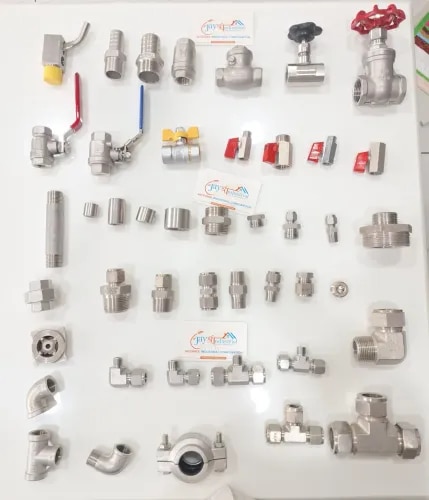
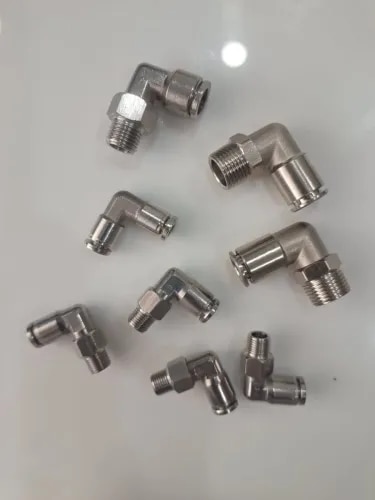
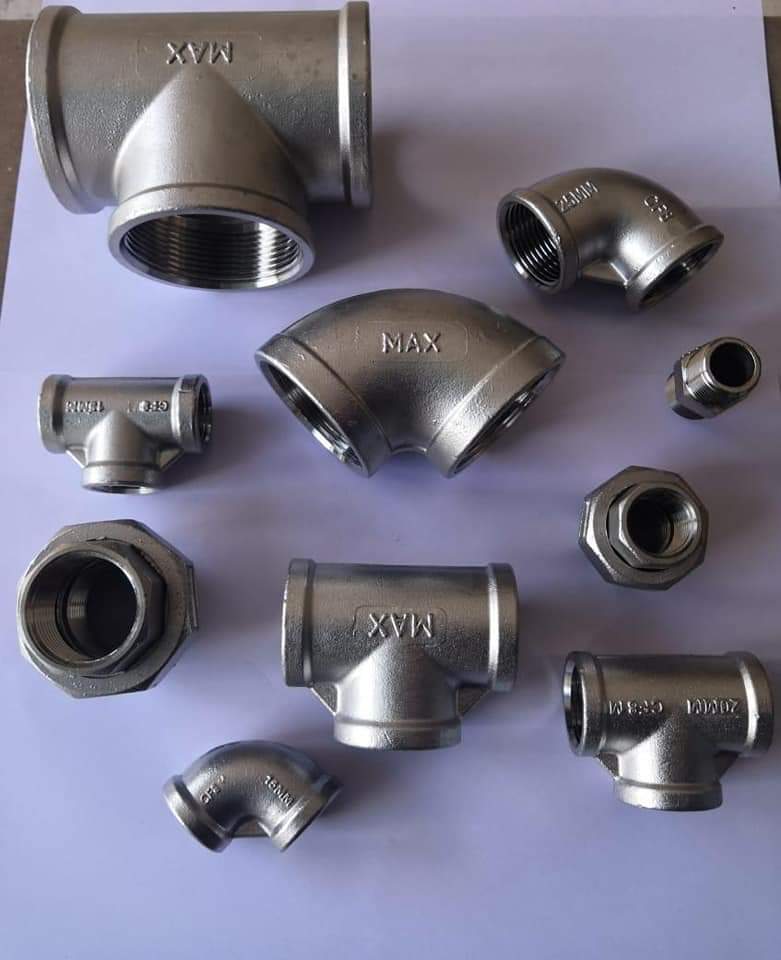
Threaded Pipe Fittings, which are essential components used to connect, redirect, or terminate sections of threaded piping networks.📐 Component Identification & FunctionsCoupling: A short sleeve with internal female threads on both sides used to connect two straight pieces of male-threaded pipe of the same size.Hex Plug: A solid male-threaded fitting with a hexagonal head used to seal and close off the female-threaded end of a pipe or valve.Bell Reducer: A conical adapter with female threads of different sizes on each end, allowing you to downsize or upsize the diameter of a pipeline.90° St Ell (Street Elbow): A 90-degree directional elbow featuring one male threaded end and one female threaded end, allowing close-quarters connections without needing an extra pipe nipple.45° Elbow: Used to change the direction of fluid flow by 45 degrees to help navigate gradual piping turns.Union: A three-piece detachable connection fitting that allows two pipes to be uncoupled and taken apart easily for line maintenance or valve replacement without twisting the pipes themselves.Tee: A T-shaped intersection fitting with three female openings used to combine or split fluid flow into a 90-degree branch line.Nipple: A short length of straight pipe with male threads on both ends used to bridge the gap between two female-threaded valves or fittings.Cross: A four-way intersection fitting with four female openings used to split fluid flow across multiple directions or build structural manifold systems.Cap: A dome-shaped internal female-threaded cover used to permanently or temporarily seal off the open male end of a pipeline.Bushing: A compact reducer fitting featuring external male threads on the outside and smaller female threads on the inside, designed to downsize a port or fitting opening directly.90° Elbow: A standard directional fitting with female threads on both sides used to change the direction of fluid flow by exactly 90 degrees.If you are currently selecting these parts for a project, let me know:What material are you using (e.g., Stainless Steel, Brass, or Galvanized Iron)?What is the thread standard required for your area (e.g., NPT or BSP)?What pressure rating (such as Class 150 or Class 3000) does your system operate under?