
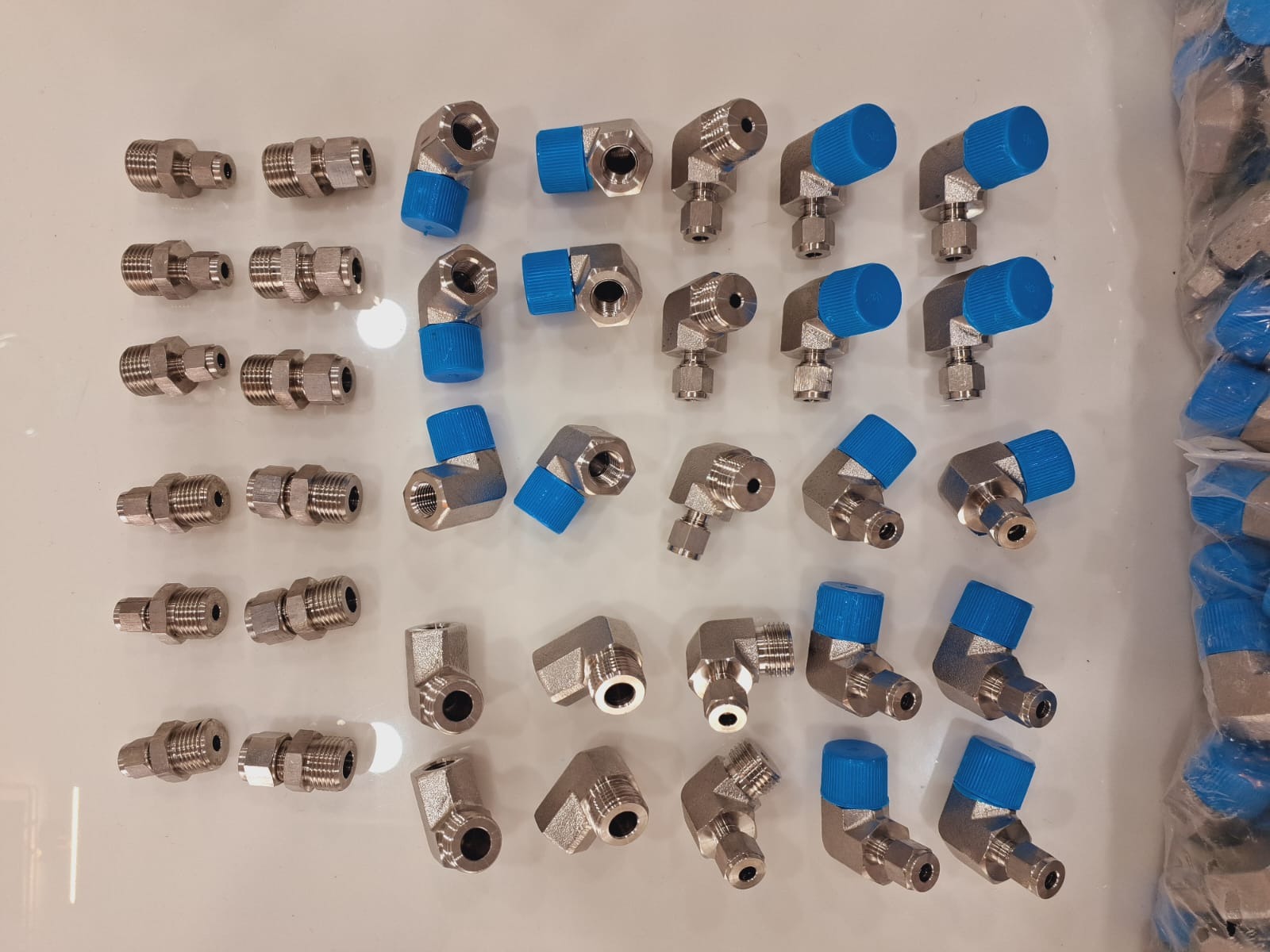
SS (Stainless Steel) male connector and female connector are matching mechanical or fluid-handling fittings used to join tubes, pipes, or electrical lines together with a leak-proof or secure bond. [1, 2, 3] ## SS Male Connector * Definition: A fitting that features external (protruding) threads or a pin-like insertion structure on the connection end. [2, 3, 4] * Design: Often built with a durable hexagonal stainless steel body (grades like 304 or 316) for wrench grip, featuring male threads (such as NPT or BSPT) on one side and a tube compression ferrule or barbed end on the other. [3, 5, 6] * Function: Screws into or inserts directly inside a corresponding female port or fitting to establish a tight conduit for fluids, gases, or signals. [2, 6] * Common Use Cases: Hydraulic systems, pneumatic lines, instrumentation, and chemical or gas processing. [1, 3] ## SS Female Connector * Definition: A fitting that features internal (recessed) threads or a socket/receptacle structure designed to receive the male counterpart. [2, 4] * Design: Crafted from high-grade stainless steel (304/316) with internal threads or a female socket opening matching the size of the male end. [5] * Function: Locks tightly around or mates with the male connector to seal the joint and prevent leaks under high pressure or temperature. [1, 2] * Common Use Cases: Pairing with male pipe nipples, gauge adapters, and valve assemblies in industrial pipelines. [6] ## Key Characteristics of Stainless Steel Connectors * Material Grades: Usually manufactured in 304 SS (good general corrosion resistance and strength) or 316 SS (higher chloride and chemical resistance). * Sealing Types: Frequently utilize tapered threads like NPT (National Pipe Thread) or BSPT (British Standard Pipe Taper), or double-ferrule compression designs for zero-leak performance. * Durability: Withstands extreme pressures (often ranging up to thousands of PSI) and wide temperature extremes far superior to brass or plastic alternatives. [1, 3, 5] If you are looking for specific sizes, thread types (like NPT vs. BSP), or applications—such as instrumentation tubing or hydraulic plumbing—let me know and I can share exact specifications.


This is your website preview.
Currently it only shows your basic business info. Start adding relevant business details such as description, images and products or services to gain your customers attention by using Boost 360 android app / iOS App / web portal.
ss (stainless steel) male connector and female connector manufacture in ahmedabad
2026-10-19T11:58:29
SS (Stainless Steel) male connector and female connector are matching mechanical or fluid-handling fittings used to join tubes, pipes, or electrical lines together with a leak-proof or secure bond. [1, 2, 3] ## SS Male Connector * Definition: A fitting that features external (protruding) threads or a pin-like insertion structure on the connection end. [2, 3, 4] * Design: Often built with a durable hexagonal stainless steel body (grades like 304 or 316) for wrench grip, featuring male threads (such as NPT or BSPT) on one side and a tube compression ferrule or barbed end on the other. [3, 5, 6] * Function: Screws into or inserts directly inside a corresponding female port or fitting to establish a tight conduit for fluids, gases, or signals. [2, 6] * Common Use Cases: Hydraulic systems, pneumatic lines, instrumentation, and chemical or gas processing. [1, 3] ## SS Female Connector * Definition: A fitting that features internal (recessed) threads or a socket/receptacle structure designed to receive the male counterpart. [2, 4] * Design: Crafted from high-grade stainless steel (304/316) with internal threads or a female socket opening matching the size of the male end. [5] * Function: Locks tightly around or mates with the male connector to seal the joint and prevent leaks under high pressure or temperature. [1, 2] * Common Use Cases: Pairing with male pipe nipples, gauge adapters, and valve assemblies in industrial pipelines. [6] ## Key Characteristics of Stainless Steel Connectors * Material Grades: Usually manufactured in 304 SS (good general corrosion resistance and strength) or 316 SS (higher chloride and chemical resistance). * Sealing Types: Frequently utilize tapered threads like NPT (National Pipe Thread) or BSPT (British Standard Pipe Taper), or double-ferrule compression designs for zero-leak performance. * Durability: Withstands extreme pressures (often ranging up to thousands of PSI) and wide temperature extremes far superior to brass or plastic alternatives. [1, 3, 5] If you are looking for specific sizes, thread types (like NPT vs. BSP), or applications—such as instrumentation tubing or hydraulic plumbing—let me know and I can share exact specifications.
2026-10-19T11:58:29


 male connector and )

Submit Your Enquiry